
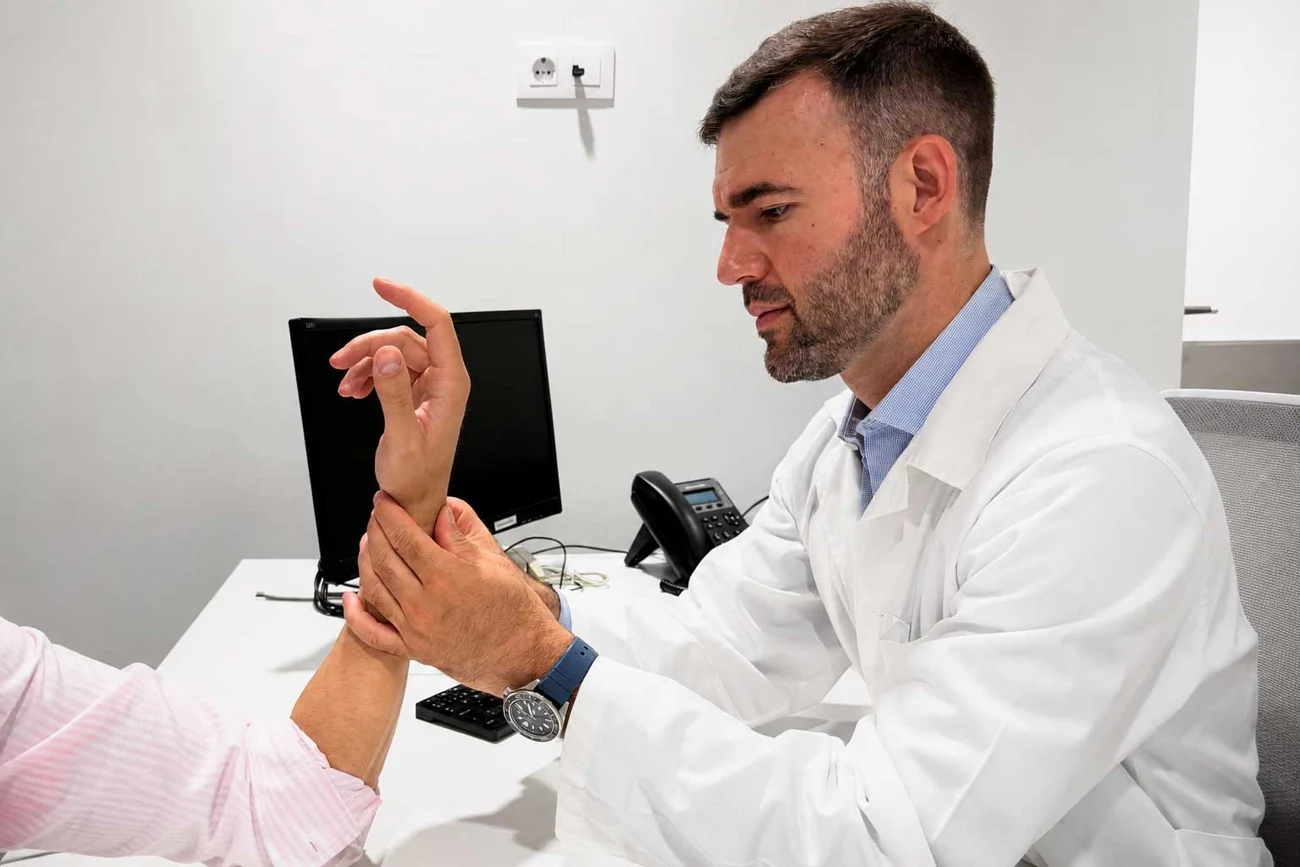
DR. DANIEL AEDO MARTÍN · MADRID
Wrist and hand ganglion
A lump that changes size deserves a clear explanation of its origin.
01
What it is
A ganglion is a benign, gel-filled cyst linked to a joint or tendon sheath. It can develop on either side of the wrist or in the hand.
02
Symptoms
It may change size, become visible or hurt with wrist movement and loading. Some cause no symptoms. Appearance alone cannot identify every new lump.
03
Assessment
Location, consistency and examination guide diagnosis. Ultrasound may clarify its contents and nearby structures. Atypical findings need further investigation.
04
Non-surgical treatment
A confirmed, non-limiting ganglion may be observed. Aspiration is an option in selected cases, but recurrence is possible. Do not puncture or strike it yourself.
05
When surgery is considered
Persistent pain or limitations may justify removal. Open or arthroscopic surgery depends on location and findings. Recurrence remains possible; scar discomfort, stiffness and nearby structure injury are discussed.
06
Recovery and follow-up
Wound care and return to weight-bearing depend on the procedure. Removal of the lump does not mean the tissues can immediately tolerate unrestricted loading. Movement and activity resume progressively.
Frequently asked questions
Is a ganglion cancer?
A ganglion is benign, but the lump first needs to be correctly identified.
Must a painless ganglion be removed?
Not always. Observation is reasonable when the diagnosis is clear and function is unaffected.
Why does the lump change size?
Fluid content can vary, making it more or less noticeable. Rapid change or new symptoms warrants review.
Can it go away without surgery?
Some change size or disappear. Observation may be reasonable when the diagnosis is clear and symptoms are minor.
Should I puncture or hit it at home?
No. Nearby vessels, nerves and tendons can be injured. Any aspiration needs clinical assessment.
Can it return after removal?
Yes, recurrence is possible even after surgery. Location and symptoms help determine whether treatment is worthwhile.
Further reading
General information to prepare for an appointment. Treatment and recovery are individualised.
EXPLAINED ON VIDEO
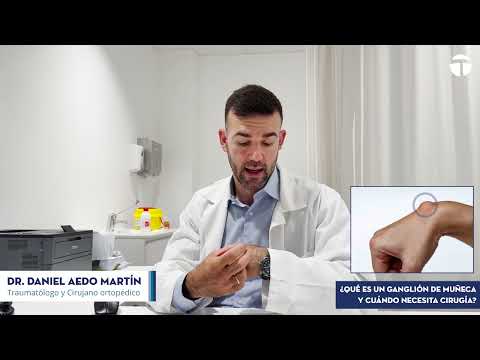
Hospital VOT Madrid · Video in Spanish