DR. DANIEL AEDO MARTÍN · MADRID
Dupuytren’s disease
Palm nodules and cords that can make it difficult to straighten the fingers.
01
What it is
Dupuytren’s affects the fascia beneath the palm skin. Nodules and cords may form and pull the fingers into a bent position. These cords are not shortened tendons.
02
Symptoms
A lump or skin pit may appear first. Later, laying the hand flat, wearing gloves or putting a hand in a pocket can become difficult. Progression varies.
03
Assessment
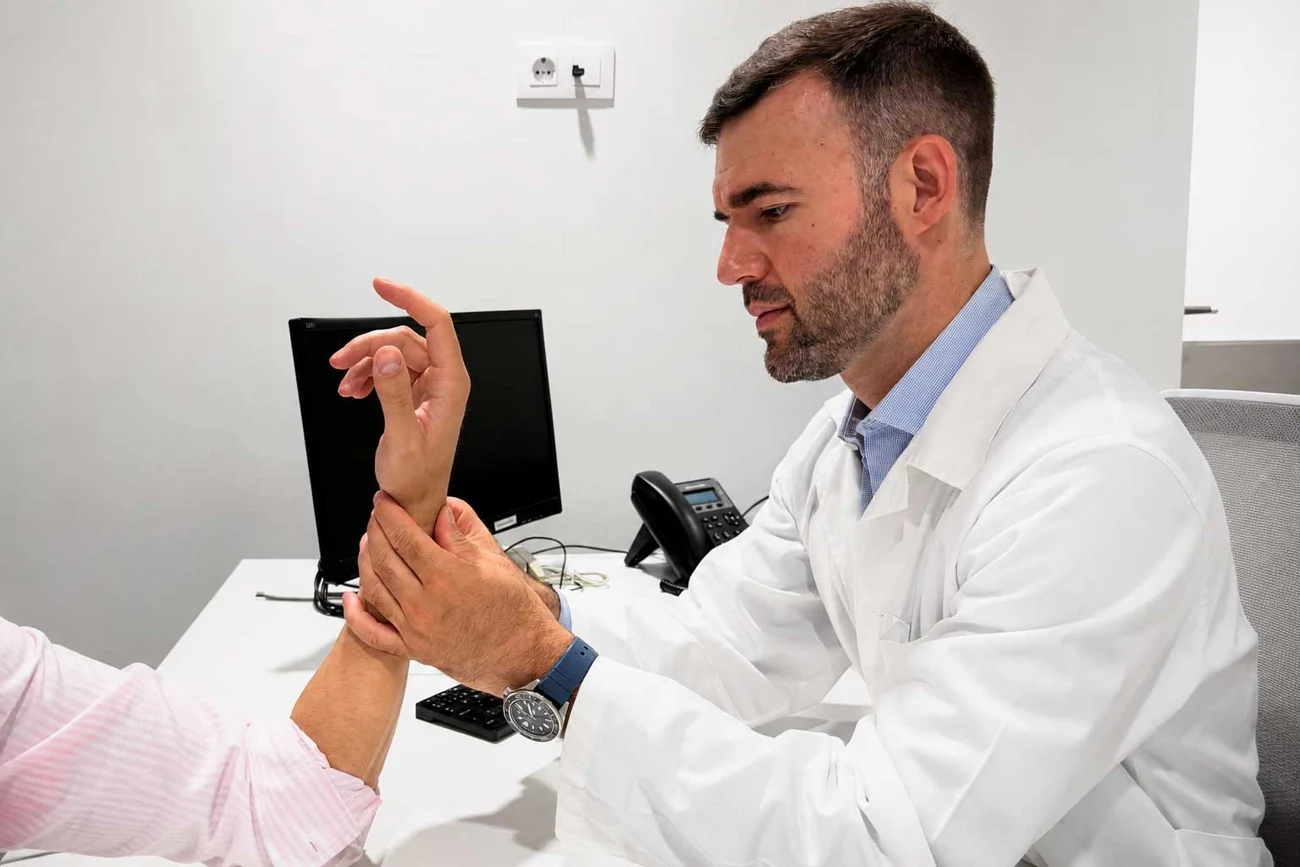
Examination measures the loss of extension at each joint and its effect on daily activities. Imaging is usually unnecessary. Change over time is important.
04
Non-surgical treatment
Nodules without functional limitation can be monitored. Forceful stretching does not remove cords. Follow-up helps identify when loss of extension warrants treatment.
05
When surgery is considered
Percutaneous needle fasciotomy divides selected cords through small punctures. It does not remove the predisposition to disease and contracture can recur. Open fasciectomy is another option. Skin, joints and nerve or tendon injury risks guide selection.
06
Recovery and follow-up
Wound care and hand therapy may be needed afterwards. Splinting depends on recovery. Correcting a contracture does not remove the tendency for the disease to progress again.
Frequently asked questions
Is it the same as trigger finger?
No. Trigger finger involves tendon catching; Dupuytren’s forms cords in the palm fascia.
Can it return after surgery?
Yes. It may recur or progress elsewhere, so follow-up remains important.
What is percutaneous treatment for Dupuytren’s?
Needle fasciotomy divides a cord through small punctures to improve extension. It does not remove all affected fascia or prevent further progression.
Is every bent finger suitable?
No. Cord location, skin, contracture severity and nearby nerves and tendons determine suitability.
How does it differ from open surgery?
Percutaneous treatment uses small access points; fasciectomy removes tissue through incisions. Recovery, risks and recurrence differ and guide selection.
When should I book an appointment?
If you cannot lay your hand flat or the contracture is progressing, assessment can measure it and explore options before daily function becomes more limited.
Further reading
General information to prepare for an appointment. Treatment and recovery are individualised.
EXPLAINED ON VIDEO
Hospital VOT Madrid · Video in Spanish