DR. DANIEL AEDO MARTÍN · MADRID
Trigger finger
When a finger hurts, clicks or catches as you open your hand.
01
What it is
Flexor tendons run through small pulleys that hold them close to bone. Restricted gliding at the A1 pulley can cause the catching known as trigger finger.
02
Symptoms
Pain at the finger base, clicking or locking in a bent position may occur. Symptoms can be worse on waking. A click alone is not a diagnosis.
03
Assessment
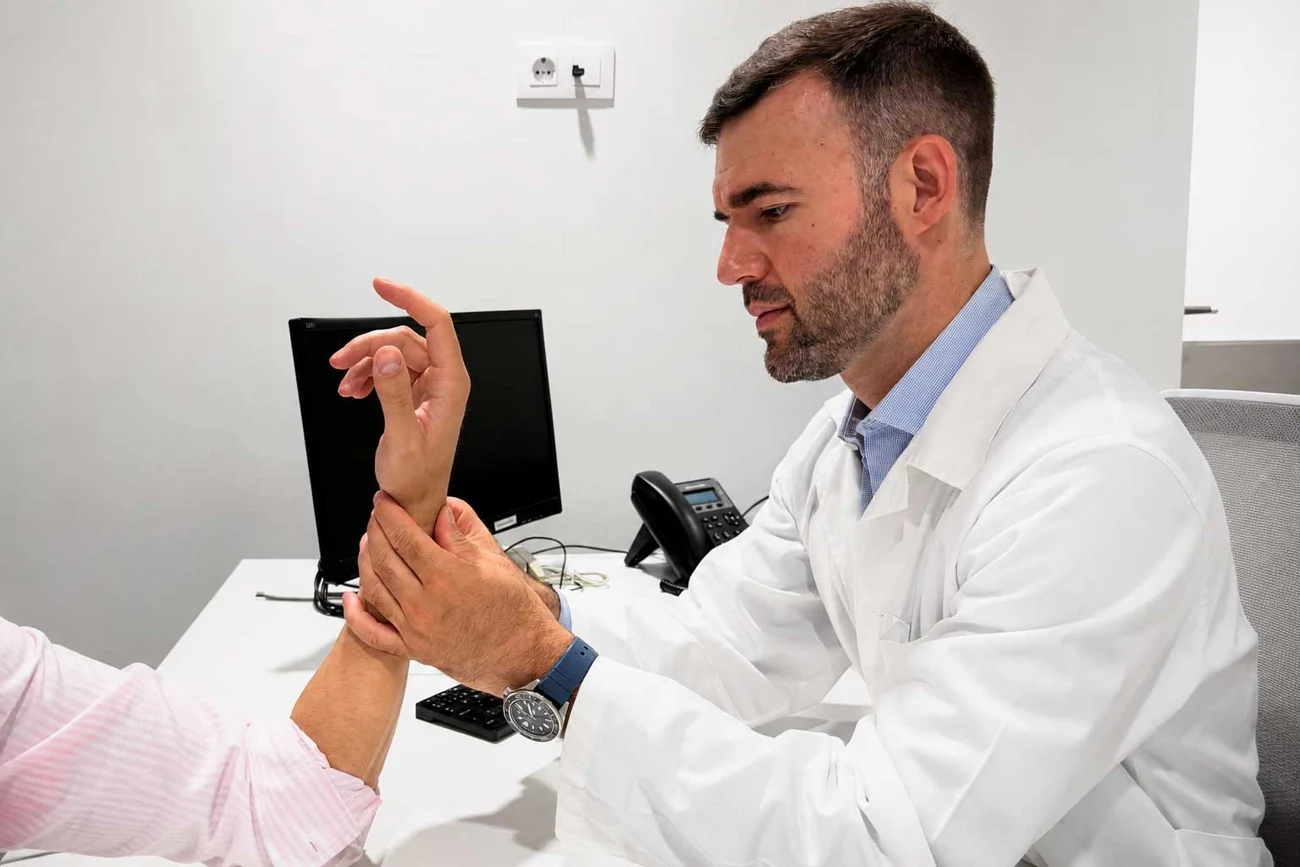
Examination usually establishes the diagnosis by checking movement, tenderness and catching. Ultrasound may help when the findings are unclear. Associated stiffness is also assessed.
04
Non-surgical treatment
Activity changes, a splint or an injection may be considered, depending on severity and duration. Previous treatment and conditions such as diabetes influence the choice.
05
When surgery is considered
Pulley release may be appropriate for persistent symptoms or significant locking. The procedure is selected after examination. Risks include stiffness, scar discomfort, infection and injury to nearby structures.
06
Recovery and follow-up
Treatment aims to restore comfortable tendon gliding and finger movement. Long-standing stiffness may take longer to improve. Do not force a painfully locked finger; follow the movement and wound-care plan.
Frequently asked questions
Can it affect the thumb?
Yes. The same problem can affect the thumb.
Does an injection always avoid surgery?
No. Response and duration of relief vary; recurrence calls for reassessment.
Is trigger finger the same as Dupuytren’s?
No. Trigger finger affects tendon gliding; Dupuytren’s produces cords in the palm fascia. They can coexist.
Can I wait if the finger remains locked?
Persistent locking or progressive loss of extension deserves assessment. Do not repeatedly force it straight.
How long will my hand be out of use?
This depends on treatment, the affected finger and your tasks. Movement is maintained or restored while protecting any surgical wound.
Can it come back?
Symptoms may recur after some treatments or affect another finger. Recurrence calls for reassessment.
Further reading
General information to prepare for an appointment. Treatment and recovery are individualised.