
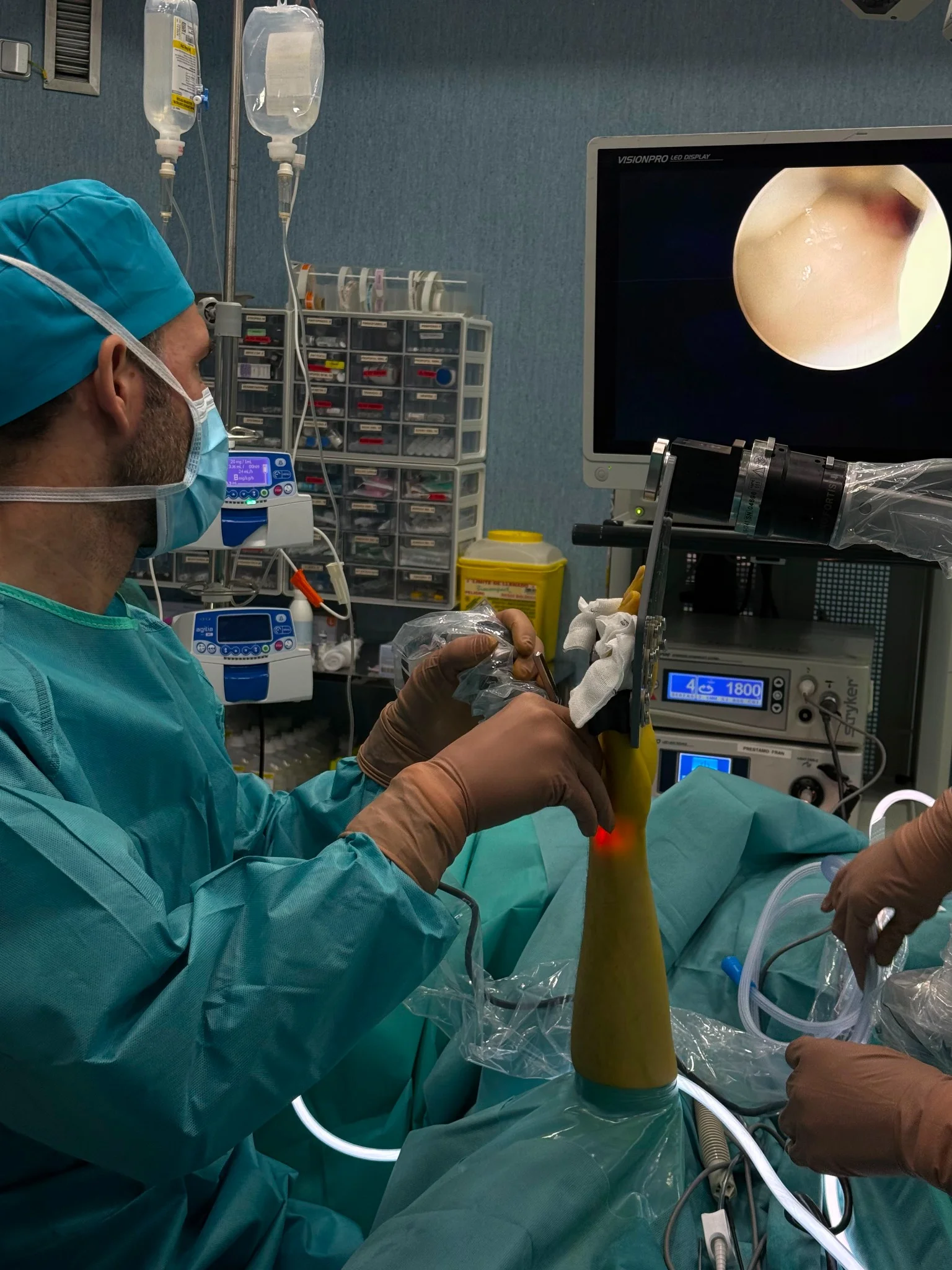
DR. DANIEL AEDO MARTÍN · MADRID
Wrist arthroscopy and its applications
Looking inside the joint to assess and treat selected injuries.
01
What it involves
Arthroscopy introduces a small camera through portals to view structures within the wrist joint.
02
Potential uses
It may help treat selected TFCC tears, carpal ligament injuries and other joint problems. It can also assess the joint surface in some fractures.
03
Assessment
Symptoms, examination and imaging guide indication. An abnormal MRI does not automatically mean arthroscopy is needed.
04
Alternatives
Observation, therapy, immobilisation or another operation may be preferable. Arthroscopy is one tool within the treatment plan.
05
The procedure
Debridement, repair or associated procedures may be performed. Nerve or tendon injury, infection, stiffness and persistent symptoms are discussed.
06
Recovery
Small incisions do not determine internal healing time. Ligament repair requires different protection from debridement.
Frequently asked questions
Is it the same as endoscopic carpal tunnel release?
No. Arthroscopy enters a joint; carpal tunnel endoscopy releases a nerve outside it.
Which TFCC tears can be treated?
Location, stability and tissue quality matter. Some are repaired, others debrided.
Does it always avoid open surgery?
No. Some treatments need combined approaches.
When can I work?
This depends on the internal procedure and job demands.
Will I need immobilisation?
It may be needed, particularly after repair.
Is it suitable for any wrist pain?
No. A diagnostic question or treatable lesion should justify the procedure.
Further reading
General information to prepare for an appointment. Treatment and recovery are individualised.
EXPLAINED ON VIDEO
Hospital VOT Madrid · Video in Spanish